
Abstract
From the beginning of Urdu Short story writing to the publication of "Angare", the effects of Sajjad Haider Yaldaram's romanticism and Munshi Prem Chand's realism on Urdu Short Stories are evident. In 1936, the Progressive movement appeared on the horizon of Urdu literature. This influenced all the writers of that period. Earlier, with the publication of "Angare", new experiments in Urdu short stories at the thematic, technic and stylistic level had begun. This is the period in which Saadat Hassan Manto was stepping into the literary world through translation. Manto had a high level of political awareness as well as literary Understanding. He was a strong believer in humans humanity. Among Manto's contemporaries, Ismat Chughtai, the feminine voice of Urdu fiction, is of special importance. There are some similarities between Manto and Ismat Chughtai, for example, both wrote on sex. Both were prosecuted for their Short Stories. This article is a comparative study of Manto and Ismat Chughtai's short stories and their characters.
Author(s):
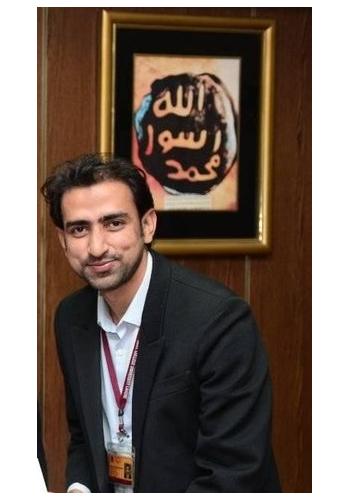
Muhammad Zeshan Wakeel
PhD ScholarDepartment of Urdu Government College University, Lahore
Pakistan
- xeshan.saadi@gmail.com
- 0334-7086499

Details:
| Type: | Article |
| Volume: | 30 |
| Issue: | 1 |
| Language: | Urdu |
| Id: | 62c3281ddf152 |
| Pages | 67 - 88 |
| Published | June 30, 2022 |

Copyrights
| Tahqeq Nama uses Creative Commons license Authors, retain copyright and grant the journal right of first publication with the work simultaneously licensed under a Creative Commons Attribution License that allows others to share the work with an acknowledgement of the work's authorship and initial publication in this journal. |
|---|

This work is licensed under a Creative Commons Attribution-NonCommercial-NoDerivatives 4.0 International License.